Home/Training/Agentic AI for Software Development: Claude Code Mastery
i2Business training session
3 days · 18hIA-250In-houseTFP-eligible (Tunisia)

Agentic AI for Software Development: Claude Code Mastery

Reliable agents, not lucky ones.

This course takes development teams from conversational assistance to agentic engineering: designing, specifying, steering and industrializing agents that carry out complete development tasks reliably and verifiably.

It establishes a complete method: executable specification up front, tests as the verification mechanism, controlled delegation, then industrialization as versioned assets shared by the team. Everything happens on the participant's real repository.

(+216) 36 361 552
Agentic AI for Software Development: Claude Code Mastery
Duration3 days · 18h of class time, 14 modules and 11 workshops
Schedule08h30 – 14h30, 20-minute coffee break at 11h00
AudienceDevelopers, tech leads, architects, DevOps, CTOs. Recommended group size: 6 to 10 participants
FormatIn person or remote, on the command line, on the participant's repository
PrerequisitesDaily use of Git and the command line, a real repository with write access to a dedicated branch, an active Claude Code license, and the pre-course kit sent 7 days ahead
ValidationCertificate of completion
TFP funding: how does it work?

Detailed syllabus

3 days, 14 modules, 11 workshops

Each day combines core concepts in the morning with hands-on practice on your own use cases in the afternoon.

Day 1 — Foundations and control: setting up a reliable agentic environment

08h30 – 08h45Introduction
Scoping and baseline measurement
  • Technical round table: stack, repository brought in, level of exposure to Claude Code.
  • Timed baseline: each participant completes a real task from their backlog without AI assistance; time and quality are recorded.
  • This measurement is the reference for calculating the gain at the end of day 3.
08h45 – 09h20Module 1
Agentic AI in the development lifecycle
  • Conversational assistant versus agent: the perceive, plan, act, verify loop.
  • How the job changes: the developer becomes architect of the task and reviewer of the result.
  • Where the agent truly speeds things up, where it degrades quality; positioning against IDE extensions and inline completion.
  • The three recurring failure modes: silent drift, hallucinated context, reviewer overconfidence.
09h20 – 09h35Module 2
One engine, many doors
  • Debrief of the pre-course kit: blockers encountered, solved together.
  • Available surfaces: terminal, VS Code and JetBrains extensions, desktop app, web, mobile; a single engine, the same CLAUDE.md, settings and MCP servers.
  • Why the course centers on the command line; anatomy of a session.
09h35 – 10h00Workshop 1
Verified environment and a first scoped session
  • Checking installation, authentication and repository permissions; creating the working branch.
  • Initializing the repository and critically reviewing the generated instructions file.
  • Deliverable: a working session and CLAUDE.md v0 committed to the training branch.
10h00 – 11h00Module 3
CLAUDE.md and memory: the agent's onboarding binder
  • Your codebase's standing instructions, read at the start of every session.
  • Four scopes, from broadest to narrowest: organization, user, project (versioned in Git), local (ignored by Git). They concatenate rather than override each other.
  • What belongs there: build and test commands, deliberate style deviations, architecture decisions, environment quirks.
  • Keep it short, concrete and verifiable; path-scoped rules, loaded only when the relevant files are touched.
  • Anti-pattern: the over-specified CLAUDE.md. Turn any rule that must always apply into a hook.
  • Auto memory: the notes the agent keeps for itself, with an index, topic files and periodic curation.
11h00 – 11h20Break
Coffee break
11h20 – 12h05Workshop 2
Writing your project's CLAUDE.md
  • Moving from the generated v0 to a written, then trimmed, v1.
  • A/B test: the same task with and without CLAUDE.md, comparing the resulting diffs.
  • Peer review in pairs: is each rule concrete, verifiable and useful?
  • Deliverable: CLAUDE.md v1 and a first path-scoped rules file, versioned.
12h05 – 12h55Module 4
The three control dials
  • Dial 1, permissions: from the default mode with confirmation before any change, to read-only, auto-approved edits and auto-approval with risky categories blocked. No control at all is reserved for isolated containers and continuous integration, never a workstation.
  • Dial 2, planning: read-only exploration, plan submitted for approval, no changes before sign-off. Fixing a plan costs far less than fixing code; if the diff fits in one sentence, skip the plan.
  • Dial 3, effort level: from mechanical work to long-running problems. It is a thermostat, not a thermometer: match effort to the stakes.
  • First trade-offs between effort and cost: orders of magnitude and decision thresholds.
12h55 – 13h20Workshop 3
Same ticket, three settings
  • A real ticket handled in planning mode, then by direct execution, at two effort levels.
  • Side-by-side measurement: elapsed time, corrections needed, diff quality.
  • Formalizing a personal decision rule.
13h20 – 13h45Module 5
Safety net and Git discipline
  • Automatic snapshot of file state before each edit; restore the code, the conversation, or both.
  • The limit: it is an undo history, not source control. Git remains the permanent record.
  • Git discipline in an agentic environment: disposable branches, frequent commits, the diff as the unit of review.
13h45 – 14h25Workshop 4
First supervised end-to-end cycle
  • A real ticket: scoping, planning, plan review in the editor, monitored execution, diff review, commit.
  • Deliberate interruption mid-run to observe recovery; using restore to replay a different approach.
  • Deliverable: a real commit produced in session on the participant's repository.
14h25 – 14h30Wrap-up
Three habits to try the very next day

Technologies & platforms

The tools you'll work with

Each platform is used live during the workshops, on your own use cases. No technical prerequisites required.

Claude CodeDays 1 to 3The command-line development agent: permissions, planning, effort level and state restore.
CLAUDE.md and memoryDay 1 · Module 3The repository's standing instructions, path-scoped, and the agent's own notes.
Specification and TDDDay 2 · Modules 7 and 8Executable specification, derived tests and human validation as the verification loop.
Subagents and skillsDay 3 · Modules 10 and 11Code reviewer, DevOps agent and team skill, versioned in the repository.
HooksDay 3 · Module 12Automatic formatting, protected paths and end of turn gated on passing tests.
MCP and headless modeDay 3 · Module 13Connecting to the code repository and the ticket tracker, running in continuous integration with guardrails.

Your trainer

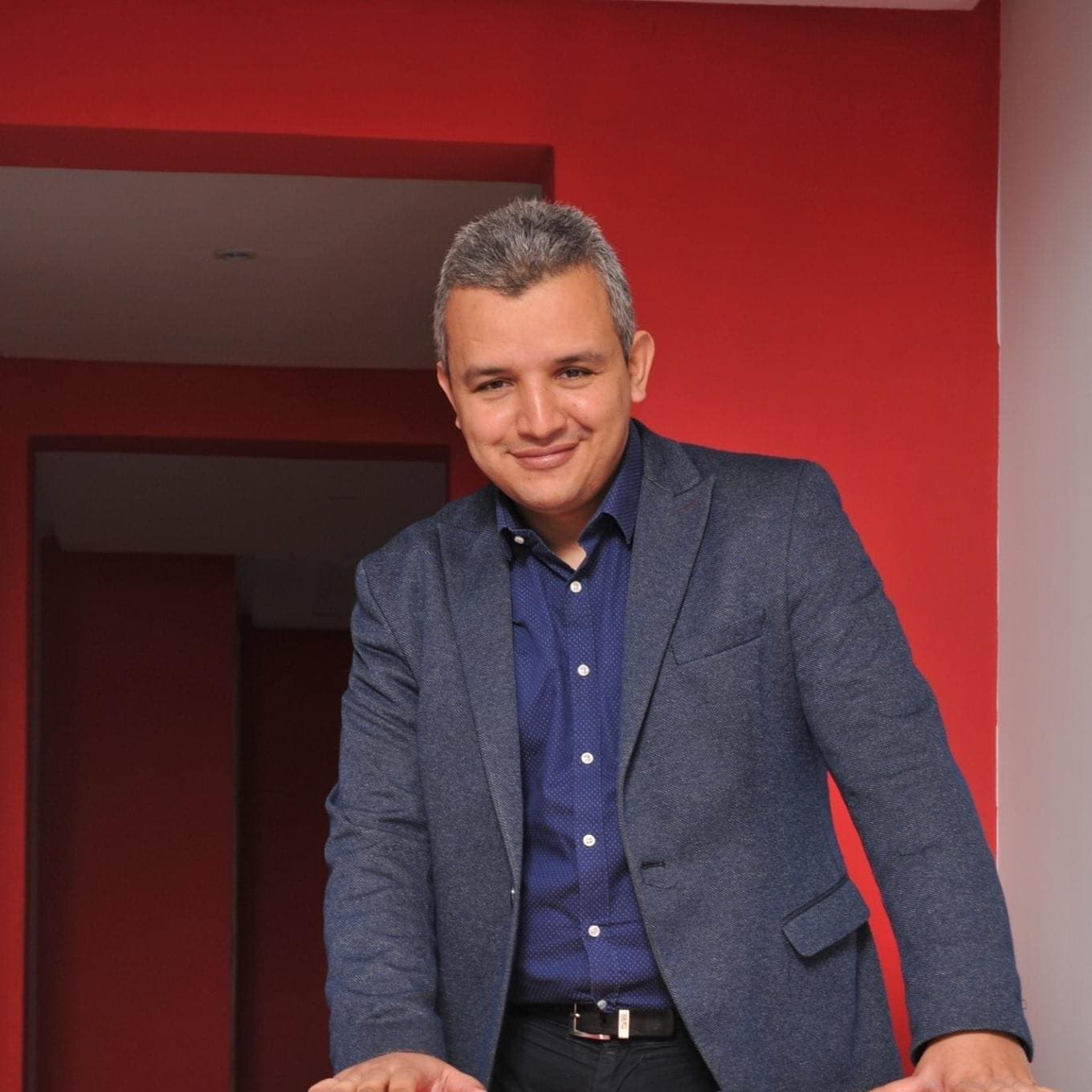
Portrait de Mohamed Kais Khenine, fondateur et formateur i2Business
Mohamed Kais Khenine, MBA
Senior Consultant & Trainer in AI, Digital Transformation & Digital Marketing

The course is led by a consultant who designs and deploys AI agents connected to our clients' business systems every day. Demos are run live, on production tools, under real-world security, cost and compliance constraints.

Claude CodeAgents & SkillsMCPAI governanceProcess automation

Funding

This course is eligible for TFP funding

Our training firm is state-approved in Tunisia (approval no. 11 1823 19), which means your company can have its training costs refunded through the TFP (Tunisia's Professional Training Tax) if it is eligible for the related tax credit.

1Eligibility checkWe confirm with you that your company is subject to TFP (Tunisia's Professional Training Tax) and that the program qualifies as an eligible expense.
2File submissionPreparing the advance or refund application: detailed program, quote, schedule and provisional list of participants.
3Course deliveryDaily sign-in sheets, learning assessment and named certificates meeting the scheme's requirements.
4Documentation and refundHandover of the closing file — invoice, attendance sheets, certificates — for the refund claim.
What we provide
  • Detailed hour-by-hour training program
  • Named quote and compliant invoice
  • Attendance sheets signed per half-day
  • Learning assessment at the start and end of the course
  • Individual certificates of completion
Questions about eligibility? Call us directly.(+216) 36 361 552

Book a session

Public session or in-house training at your premises, tailored to your processes. We'll get back to you within 24 business hours with a proposal and the TFP paperwork.

(+216) 36 361 552